A lot of women don’t realize how much is happening in the first trimester before anything looks different. Your hormone levels are rising rapidly, your blood volume is starting to increase, and by the end of week 12, a functioning heart, brain, spinal cord, and early organ structures are all in place.
That’s why these weeks are considered the most sensitive stage of pregnancy. And it’s why symptoms, nutrition, and daily habits matter more during this window than most people are told upfront.
When the first trimester actually starts
The first trimester runs from week 1 to week 12. Most women don’t realize they’re pregnant until around week 4 or 5, so a significant portion of this stage has already passed before the test comes back positive.
That’s worth knowing because it changes how you think about the timeline.
Trimester-by-trimester support guides
I've written educational guides for each trimester covering nutrition, supplementation, and symptom management, available individually or as a bundle.
Browse guides →What you might feel during these weeks
Both experiences are normal: some women feel relatively unchanged in the first trimester, and others feel like their body has completely shifted overnight. Common symptoms include:
- Fatigue
- Nausea and vomiting (often called morning sickness, though it can happen at any time of day)
- Food aversions
- Breast tenderness
- Frequent urination
- Mood changes
- Heartburn and constipation
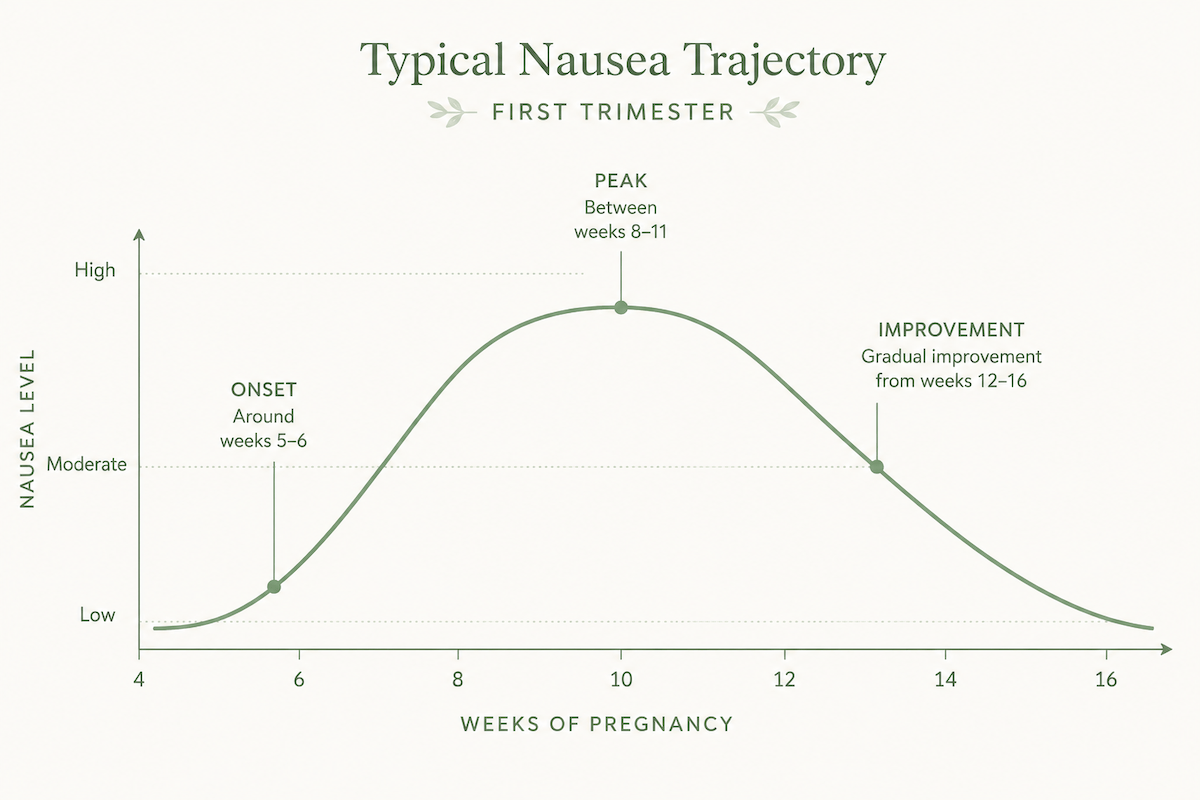
Morning sickness is one of the more disorienting symptoms. For most women it starts around weeks 5 to 6, peaks somewhere between weeks 8 and 11, and begins to ease between weeks 12 and 16. If you’re in the thick of it right now, that timeline matters. It does tend to get better.
Your body is adjusting to rapidly rising hormone levels. Once those levels begin to stabilize, symptoms often follow.
Early prenatal testing
Most women have their first prenatal visit somewhere between weeks 6 and 12. Blood work at this visit typically includes:
- Complete blood count
- hCG (the pregnancy hormone)
- Blood type
- Rh factor
- Screening for certain infections, including rubella, hepatitis B, and syphilis
The Rh factor test is one that many women don’t know much about going in. Rh factor is a protein found on red blood cells. Some people have it and some people don’t. If you’re Rh-negative and your baby is Rh-positive, your immune system may treat the baby’s blood as foreign. Left unaddressed, this can lead to complications including anemia and jaundice in the baby. An Rh immune globulin injection prevents your immune system from developing those antibodies, protecting both this pregnancy and future ones. Early screening is how this gets caught and managed in time.
Around the same point, many women have a dating ultrasound, usually around week 8. It confirms the pregnancy, checks for a heartbeat, and estimates your due date.
The nutrient most prenatal vitamins miss
Even before testing is underway, nutrition should be a main focus. One nutrient deserves particular attention: choline.
Choline plays a role in brain and nervous system development in the baby and supports cell membrane formation and fetal growth. Pregnant women need about 450 mg per day, and many prenatal vitamins contain very little or none of it.
Eggs are one of the best food sources. It takes roughly 3 eggs per day to meet choline needs from food alone. Other sources include chicken, milk, broccoli, and Brussels sprouts. If you’re using a choline supplement, taking it with food that contains fat improves absorption.
In addition, overall energy needs also go up. Most women need roughly 300 additional calories per day during the first trimester to support growing tissue and the increased metabolic demands of pregnancy.
A quick note on caffeine: most major health organizations recommend limiting it to about 200 mg per day during pregnancy. That’s roughly 1 to 2 cups of coffee, or a few cups of tea depending on the type. Ginger and peppermint tea are commonly used in the first trimester and are generally well-tolerated. Not all herbal teas are safe during pregnancy, though, so it’s worth checking with someone knowledgeable in herbal medicine before using herbs & teas throughout your pregnancy.
Managing nausea
If nausea is making eating feel impossible, a few practical changes can help.
Eating small amounts every 1 to 2 hours tends to work better than 2 to 3 larger meals. An empty stomach tends to make nausea worse. Bland foods like crackers, rice, toast, and bananas are typically easier to tolerate, and cold foods are often more manageable than hot ones because they have less smell.
Ginger is one of the most commonly used and well-researched natural supports for morning sickness. It may help by improving stomach motility and interacting with serotonin receptors in the digestive tract, which are involved in the nausea reflex. Ginger tea, ginger chews, or capsules are all reasonable options.
Vitamin B6 (pyridoxine) is also frequently used. It’s actually the active ingredient in Diclectin, a medication commonly prescribed during pregnancy for nausea.
One small shift that many women find useful: separate fluids from food. Drink water 20 to 30 minutes before or after meals rather than during. It reduces the volume in the stomach while you’re eating.
If nausea becomes severe or you’re unable to keep food down, flag it with your care team. Hyperemesis gravidarum (HG) is a more serious form of pregnancy nausea that can cause significant weight loss, dehydration, and electrolyte imbalances. It warrants proper clinical assessment and treatment.
Constipation
Progesterone slows digestion. That’s a normal part of pregnancy, but it can cause real discomfort. A few habits make a difference:
- Hydration: Most pregnant women need 2 to 3 litres of fluid per day. The majority aren’t getting close to that amount.
- Kiwi fruit: 2 kiwis per day provides both soluble and insoluble fiber, plus an enzyme that supports gut motility.
- Prunes or prune juice: About 4 to 6 prunes or half a cup of prune juice contains sorbitol, a natural osmotic that draws water into the intestines and helps soften stool.
- Apples and pears with the skin on: These provide pectin, a soluble fiber that helps retain water in the stool.
- Movement: Walking supports bowel motility.
Motility refers to the automatic muscle contractions (called peristalsis) that squeeze and propel food and waste through your gastrointestinal tract.
If nutrition and movement aren’t enough, magnesium oxide or magnesium citrate can help ease bowel movements as needed, as these supplements are considered osmotic laxatives. Osmotic laxatives help to pull water into the colon, and this extra water softens your stool and helps to trigger bowel movements.
A note on skincare
Some skincare ingredients are best avoided during pregnancy. Retinoids, including retinol and prescription vitamin A derivatives, are linked to birth defects and should be avoided. High concentrations of salicylic acid are also best avoided. Many women switch to mineral-based sunscreens containing zinc oxide or titanium dioxide during this time. The Environmental Working Group website is a practical resource for checking specific products.
Daily habits worth building now
- Drink 2 to 3 litres of fluid per day
- Eat every 1 to 3 hours, even when appetite is low
- Include protein at meals and snacks, aiming for around 100 g per day
- Keep moving: walking, strength training, and gentle activity are appropriate throughout pregnancy (if starting new activities, double check and get guidance from your medical doctor)
The first trimester can feel intense. Your body is doing an enormous amount of work behind the scenes, and it’s completely normal to feel tired and off. This stage is about supporting your body through that, not pushing through it.
Trimester-by-trimester support guides
I've put together guides for each trimester covering nutrition, supplementation, symptom management, and lifestyle in more depth than a single post can. They're available individually or as a bundle.
Browse guides →If you’re working with or considering seeing an ND during your pregnancy, the guide on what to expect at a first naturopathic visit covers how that appointment typically works. And if you are in Ontario and you’d like to talk through nutrition, lab work, or symptom management for your specific situation, you can book an appointment with Dr. Mariah, ND to get started.