A lot of women are told they have cysts on their ovaries and immediately assume that means PMOS (polyendocrine metabolic ovarian syndrome, formerly PCOS). An ultrasound report mentions cysts, or someone uses the word in passing, and the worry sets in. The two get linked constantly, online and sometimes in the clinic, but the majority of the time that link isn’t accurate.
I work closely with women navigating hormonal health, fertility, and PMOS, and “does having ovarian cysts mean I have PMOS?” is one of the most common questions I hear. So here is the difference, why an image can be misleading, and how each one is actually diagnosed.
What PMOS actually is
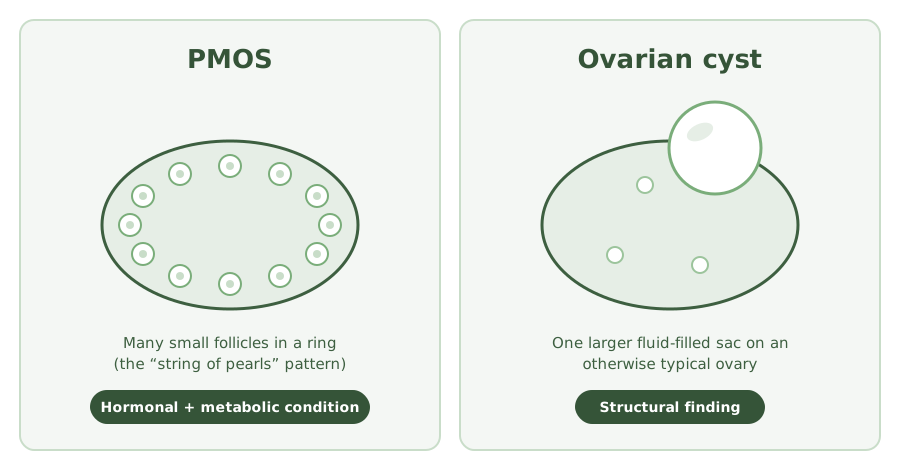
PMOS is a hormonal and metabolic condition. It is not simply having cysts on your ovaries.
In fact, the so-called cysts in PMOS aren’t true cysts at all. They are fluid-filled sacs called follicles, immature eggs that don’t mature and ovulate the way they should. Over time these follicles can build up and the ovary can enlarge. On ultrasound this is sometimes described as a “string of pearls.”
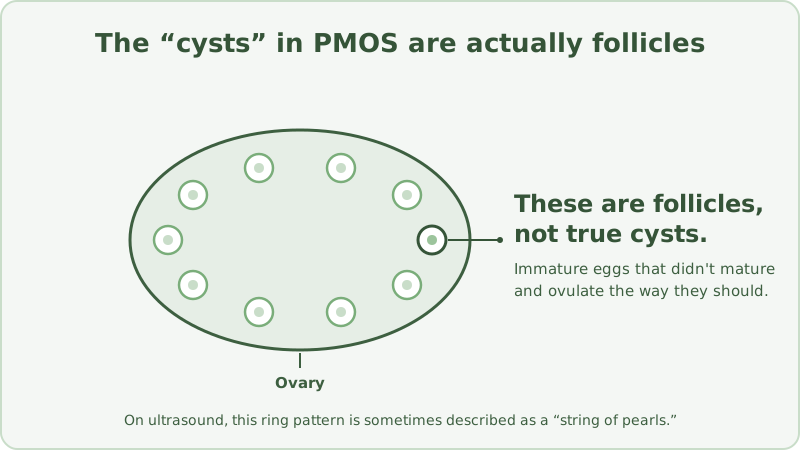
But seeing that pattern alone does not mean someone has PMOS. It’s one piece of a larger picture. PMOS involves irregular ovulation or missed periods, higher androgen levels, and often insulin resistance. Here is the part that surprises people: having PMOS doesn’t always mean your ovaries will look polycystic on a scan, and having ovarian cysts doesn’t automatically mean you have PMOS.
What ovarian cysts actually are
Ovarian cysts are fluid-filled sacs that develop on the ovaries. They are very common, and in the majority of cases completely harmless. A few types are worth knowing:
- Functional cysts: Form during your normal menstrual cycle and usually resolve on their own.
- Dermoid cysts: Can contain tissue like hair or skin. Typically benign, but may need surgery to be removed.
- Hemorrhagic cysts: Happen when a cyst bleeds internally.
- Endometriomas: Often linked to endometriosis.
Most cysts resolve without any intervention. Some can grow larger or rupture, which may cause sudden pain, bloating, or other symptoms, so monitoring them over time helps make sure nothing more serious is going on. Unlike PMOS, which is both a hormonal and metabolic condition, a cyst is more of a structural finding: a fluid-filled sac sitting on the ovary.
Why an ultrasound alone can’t diagnose PMOS
Ultrasound is a useful tool for looking at ovarian cysts and for one part of a PMOS workup. But seeing cysts on a scan does not, on its own, mean PMOS.
Even healthy women can show multiple small follicles on a single ultrasound. That’s why a scan is never the whole story. Diagnosis of PMOS relies on a combination of hormone patterns, symptoms, and ovarian appearance, not the image by itself.
How the symptoms differ
PMOS and ovarian cysts can feel quite different day to day.
| PMOS | Ovarian cysts | |
|---|---|---|
| Nature | Hormonal and metabolic | Structural (fluid-filled sac) |
| Cycle | Irregular or missed periods | Often normal, regular cycles |
| Common signs | Excess hair growth, acne, body composition changes, insulin resistance | Pelvic pressure or pain, bloating, discomfort during periods or intercourse |
| Acute issue | Ongoing pattern over time | A cyst can occasionally rupture, which is painful |
PMOS tends to show up as a pattern across your whole system. A cyst tends to be more localized, and a woman with completely regular cycles can still have one.
How each one is diagnosed
For the diagnosis of PMOS, a doctor usually follows the Rotterdam criteria, which looks at three factors:
- Ovulation: Irregular or missing periods are a key clue.
- Androgens: Signs of high androgens like excess hair growth along the jawline or acne, or elevated testosterone on bloodwork.
- Ovaries on ultrasound: Whether they show that polycystic, string-of-pearls appearance.
You only need two of those three findings to be diagnosed with PMOS.
That’s part of why PMOS looks so different from one woman to the next. It’s about patterns in your hormones and cycles, not just what shows up on a scan.
Ovarian cysts, by contrast, are usually identified primarily through imaging. Most are harmless and simply watched over time.
Working on irregular cycles?
The Menstrual Cycle Regulation Guide walks through the nutrition, supplement, and lifestyle foundations that help your body feel supported enough to cycle regularly again. A practical starting point if missed or unpredictable periods are part of your picture.
View the guide →Why the confusion is so common
There is a lot of mixed information out there, and the media doesn’t always help.
You’ll see posts and headlines that call any ovarian cyst “PMOS,” which isn’t accurate and creates unnecessary worry. Even some health professionals link the two casually without looking at the full picture: hormone levels, ovulation patterns, and overall symptoms.
If this was confusing for you, that’s understandable. The old name, PCOS (polycystic ovary syndrome), pointed at the ovaries as though cysts were the whole condition, which is a big reason the name changed. If you want the background on that, I wrote a separate post on why PCOS is now PMOS.
One step at a time
Although both conditions involve the ovaries, they are different. PMOS is a hormonal and metabolic condition. Cysts are usually a structural finding. Knowing which one you’re actually dealing with is the difference between guessing and having a plan.
If you suspect PMOS, the most useful next step is bloodwork: a thyroid panel, fasting insulin/fasting glucose, HbA1C, total and free testosterone, SHBG, DHEAS, LH, FSH, and prolactin.
Most of these are covered by OHIP when ordered through your family doctor or nurse practitioner, so that is often the most affordable starting point.
You can also order them through a naturopathic doctor; that route isn’t OHIP-covered, but many extended health plans cover part or all of it, so it’s worth checking your benefits first.
For a fuller walk-through of how this looks in practice, see the guide on naturopathic care for PMOS in Ontario.
And if you’re located in Ontario and want to review your labs or build a plan around the foundations, you can book an appointment.