A lot of women don’t realize how much of iron comes down to timing. Low iron is one of the most common reasons to feel tired, foggy, and worn down, and it is also one of the more fixable things I see. But iron is fussy. It is fussy about how it gets tested, and it is fussy about what else is in your stomach when you take it.
Two women can take the exact same supplement and end up in very different places three months later, mostly because of when they took it.
Here is the one-page version.
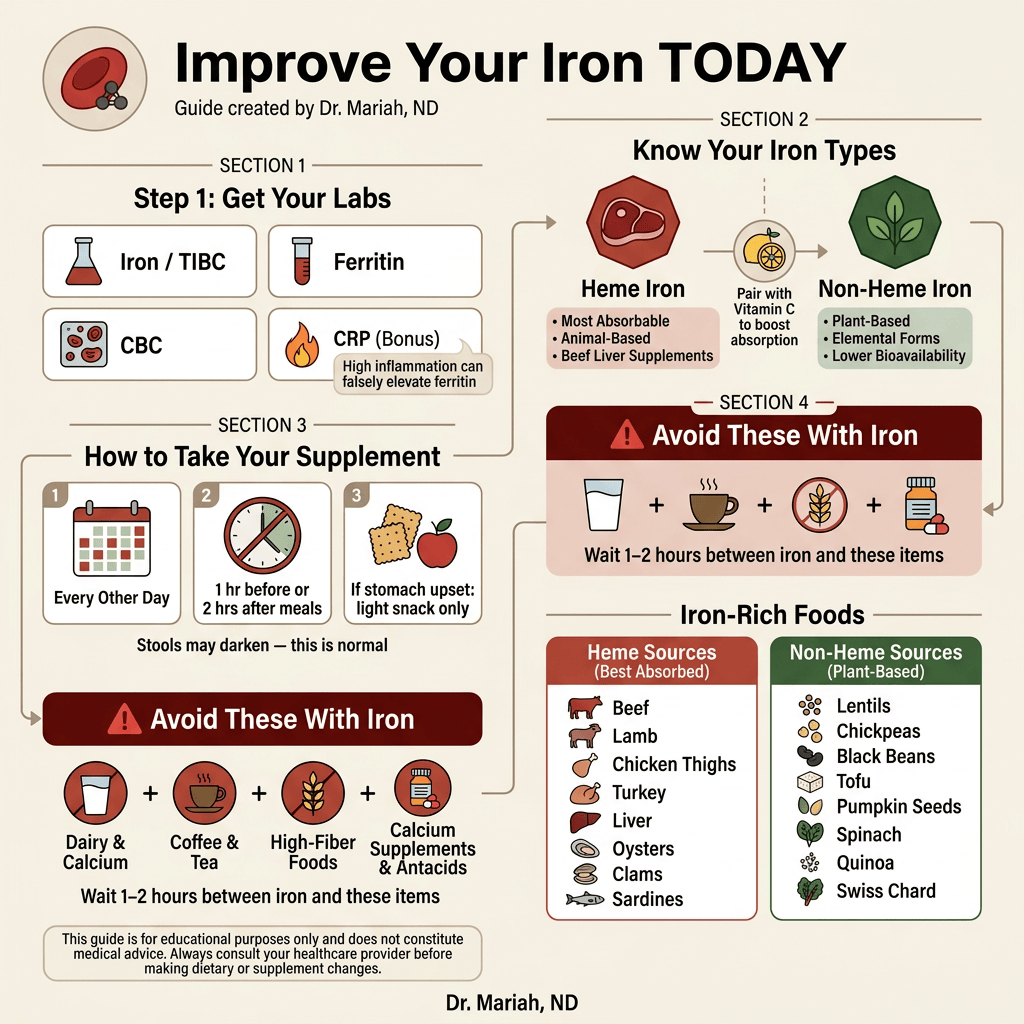
Step 1: start with labs
Before you guess at a dose, get the picture. Ask for:
- Iron and TIBC. How much iron is circulating, and how much capacity you have to carry it.
- Ferritin. Your iron storage, and usually the first number to drop.
- CBC. Whether low iron has started to affect your red blood cells.
- CRP. A marker of inflammation. This one matters more than people expect, because high inflammation can falsely raise ferritin. A ferritin that looks normal can hide a real deficiency underneath it.
Your MD or NP can order these, and they are usually covered in Ontario. That is the cheaper path, so start there.
Know your iron types
Not all iron absorbs the same way, and the difference is large enough to matter.
- Heme iron is animal based and the most absorbable form. Beef liver supplements are a concentrated source of it.
- Non-heme iron is plant based, and it is also the form used in most elemental supplements. Lower bioavailability, so it needs more help to get where it is going.
Vitamin C helps both of them. A squeeze of citrus, half a bell pepper, or a small glass of orange juice alongside your dose meaningfully improves how much you take up. This is the easiest change on this page and most women are not doing it.
How to take your supplement
- Every other day is often better absorbed than daily dosing, and it tends to be gentler on your stomach. Daily is not wrong, it is just frequently not better.
- Take it on a fairly empty stomach. One hour before a meal, or two hours after one.
- If it upsets your stomach, take it with a light snack rather than a full meal.
- Stools may darken. That is normal and not a cause for concern.
Keep these away from your dose
These bind iron in your gut and cut how much of it you actually absorb:
- Dairy and calcium
- Coffee and tea
- High-fibre foods
- Calcium supplements and antacids
Leave one to two hours on either side of your dose. Practically, that often means the iron goes mid-morning or mid-afternoon rather than with breakfast, because breakfast is usually where the coffee and the dairy live.
Iron-rich foods
Heme sources, the better absorbed of the two: beef, lamb, chicken thighs, turkey, liver, oysters, clams, sardines.
Non-heme sources, plant based: lentils, chickpeas, black beans, tofu, pumpkin seeds, spinach, quinoa, Swiss chard.
If you are mostly eating from the second list, the vitamin C pairing is doing more work for you than it is for someone eating from the first.
Give it time, then retest
Recheck in about three months. Energy often turns around well before ferritin does, and that gap is where a lot of women stop supplementing too early. Retest before you decide you are done.
Ask why it dropped in the first place. Heavy periods, low stomach acid, celiac disease, and simply not eating much iron are the usual reasons. Replacing the iron without answering that question tends to land you back in the same place a year later.
Where to start
You don’t need to do all of this at once. Get the labs first so you know where you actually stand, then move the timing. Small habits can lead to big results here, and iron is one of the places where that is genuinely true.