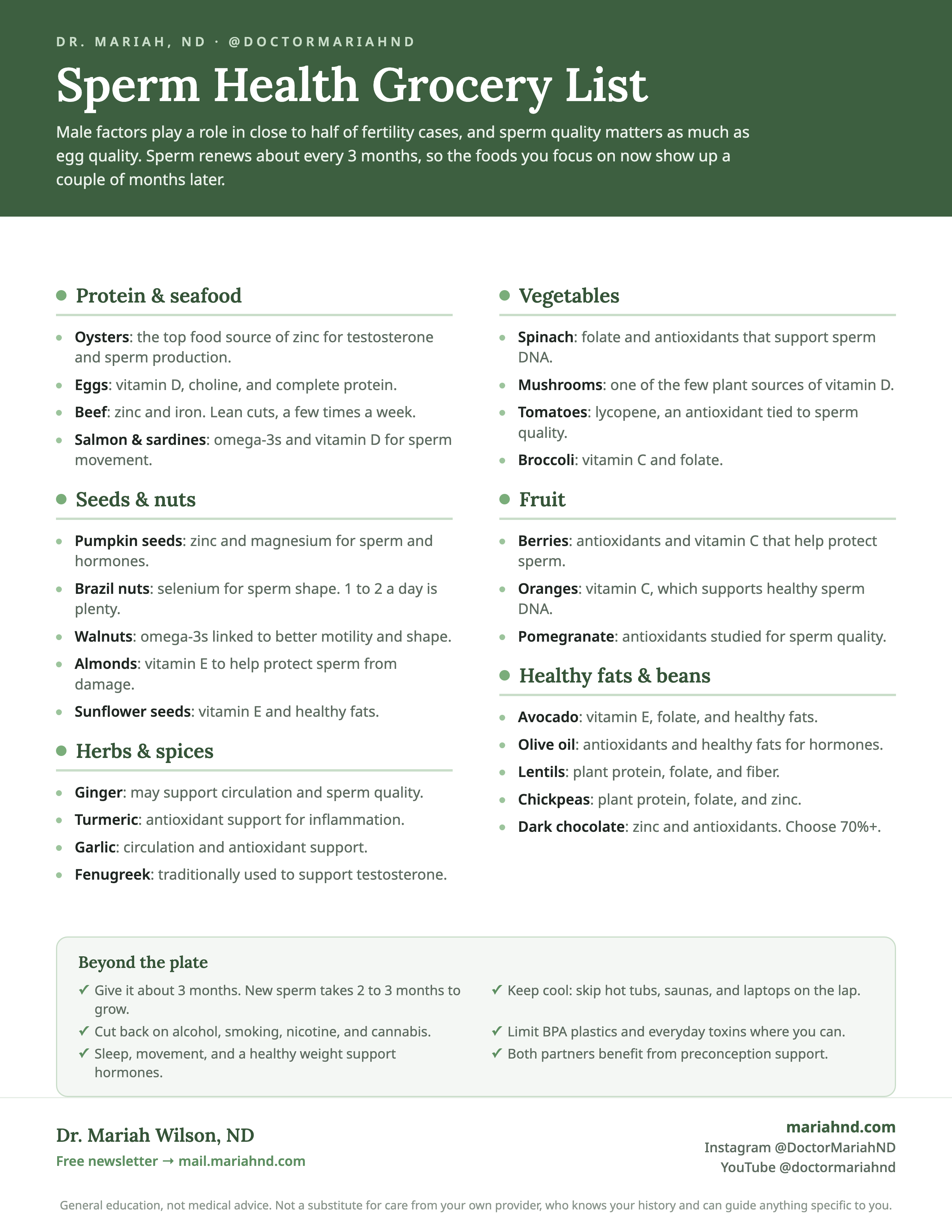
Fertility takes two. Male factors play a role in close to half of all cases, and sperm quality matters just as much as egg quality. Sperm also renews itself about every 3 months, so the food and habits you focus on now show up a couple of months down the road. Here is a simple starting point, grouped by category, with the main nutrient each food offers.
Protein and seafood
- Oysters: the top food source of zinc, which supports testosterone and sperm production.
- Eggs: vitamin D, choline, and complete protein for hormones and sperm.
- Beef: zinc and iron. Choose lean cuts a few times a week.
- Salmon and sardines: omega-3s and vitamin D for sperm movement and count.
Seeds and nuts
- Pumpkin seeds: zinc and magnesium for sperm and hormone health.
- Brazil nuts: selenium for sperm shape and motility. One or two a day is plenty.
- Walnuts: omega-3s linked to better sperm motility and shape.
- Almonds: vitamin E, an antioxidant that helps protect sperm from damage.
- Sunflower seeds: vitamin E and healthy fats.
Herbs and spices
- Ginger: may support circulation and sperm quality.
- Turmeric: antioxidant support for inflammation.
- Garlic: circulation and antioxidant support.
- Fenugreek: traditionally used to support healthy testosterone.
Vegetables
- Spinach: folate and antioxidants that support sperm DNA.
- Mushrooms: one of the few plant sources of vitamin D.
- Tomatoes: lycopene, an antioxidant tied to sperm quality.
- Broccoli: vitamin C and folate.
Fruit
- Berries: antioxidants and vitamin C that help protect sperm.
- Oranges: vitamin C, which supports healthy sperm DNA.
- Pomegranate: antioxidants studied for sperm quality.
Healthy fats and beans
- Avocado: vitamin E, folate, and healthy fats.
- Olive oil: antioxidants and healthy fats that support hormones.
- Lentils: plant protein, folate, and fiber.
- Chickpeas: plant protein, folate, and zinc.
- Dark chocolate: zinc and antioxidants. Choose 70% or higher.
Beyond the plate
- Give it about 3 months. New sperm takes 2 to 3 months to grow, so diet and lifestyle changes need time to show up.
- Keep things cool. Skip hot tubs, saunas, tight underwear, and laptops on the lap.
- Cut back on alcohol, smoking, nicotine, and cannabis.
- Limit BPA plastics and everyday toxins where you can.
- Sleep, regular movement, and a healthy weight all support hormones.
- Both partners benefit from preconception support, not just one.
How to use this
You don’t have to change everything at once. Pick a few of these to keep on rotation, give your body a couple of months, and let small habits add up. Sperm health responds to consistency more than perfection.