A lot of women look at someone else’s PMOS and decide they must not have it themselves.
One woman has acne, facial hair growth, and irregular cycles. Another has clear skin, regular periods, and cycles she can track to the day, but high testosterone on her blood work and polycystic ovaries on an ultrasound. Both have PMOS (polyendocrine metabolic ovarian syndrome, formerly PCOS), but it shows up completely differently for each woman.
There is a clinical reason for that, and it comes down to four phenotypes. Once you know which one likely describes you, the priorities for your care start to make a lot more sense.
I work with women every week who have PMOS, and one of the first questions I try to answer is which version we are working with. The diagnosis covers such a wide range of symptoms that the single most useful thing is often pinning down the phenotype, because that tells us what is actually driving the symptoms.
How PMOS is diagnosed
PMOS is diagnosed using the Rotterdam criteria. To meet it, you need at least two of these three features:
- Irregular or absent ovulation. This shows up as irregular periods, long cycles, skipped periods, or cycles you can’t predict. A typical cycle runs 21 to 35 days, and the length shouldn’t vary by 7 or more days when you compare your cycles to each other. A cycle that consistently falls outside that range often signals that ovulation isn’t happening reliably.
- Elevated androgens (hyperandrogenism). Androgens like testosterone and DHEAS are present in all women in small amounts. When they run high, they can drive jawline and chin acne, oily skin, excess facial or body hair (hirsutism), and thinning hair on the scalp. High testosterone can also show on blood work. You don’t need every symptom; one or two can qualify, especially with supporting labs.
- Polycystic ovaries on ultrasound. The ovaries show multiple small follicles, often described as a string of pearls. The word “cyst” is a bit of a misnomer here. What’s actually being seen are immature follicles that built up because the eggs weren’t maturing and releasing the way they should each cycle.
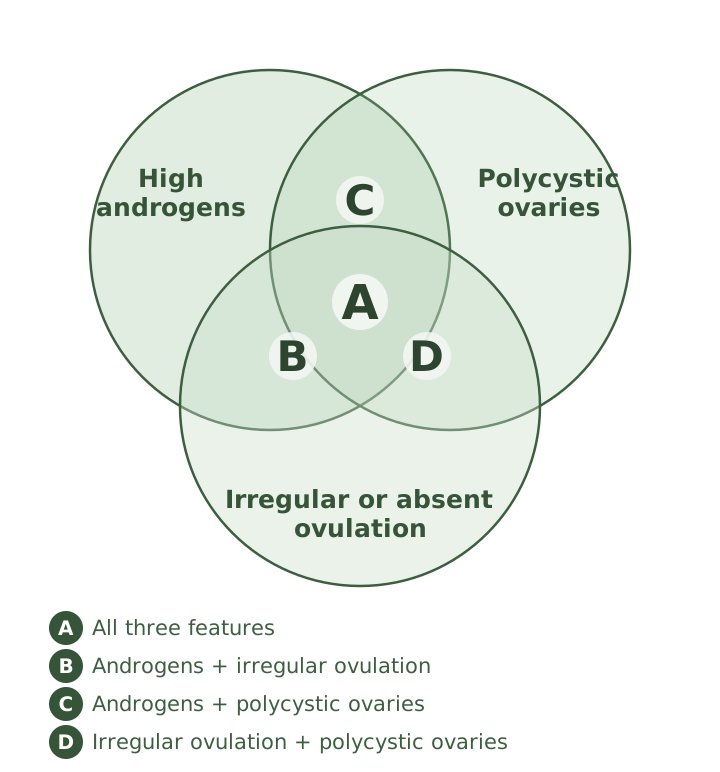
Those three features combine into four phenotypes, and each carries a different metabolic risk. Let’s go through them from highest risk to lowest.
The four phenotypes
Phenotype A is the full presentation, and it’s what most people picture: high androgens, irregular ovulation, and polycystic ovaries, so all three features at once. It’s the most common presentation, occurring in roughly 44 to 65% of diagnoses depending on the population studied, and it carries the highest metabolic risk. That means the strongest association with insulin resistance, higher triglycerides, lower HDL (your protective cholesterol), and a higher risk of metabolic syndrome, which raises long-term risk of type 2 diabetes and cardiovascular disease. Androgen symptoms tend to be most pronounced here, and weight gain around the abdomen is common.
Phenotype B is high androgens plus irregular ovulation, but without polycystic ovaries on the ultrasound. This one surprises a lot of women, because you can have PMOS without cysts on your ovaries. Metabolically, A and B look very similar; research shows no meaningful difference in endocrine or metabolic outcomes between them. If you were told you don’t have PMOS only because your ovaries looked clear, that is worth a second look. I covered this in more detail in ovarian cysts and PMOS are not the same thing.
Phenotype C is sometimes called ovulatory PMOS. There are high androgens and polycystic ovaries, but ovulation is still happening on a regular cycle. The acne, excess hair growth, or scalp thinning are present, and the ultrasound shows the string-of-pearls pattern, but cycles fall in that normal 21 to 35 day range and ovulation can be confirmed with progesterone testing in the luteal phase. Metabolic risk sits in the middle. Even with intact ovulation, elevated androgens can still drive inflammation and some insulin resistance. Women with phenotype C are sometimes dismissed because their cycles look normal, so the conversation ends too early.
Phenotype D is the outlier: irregular ovulation and polycystic ovaries, but no androgen excess. No acne, no excess hair growth, normal testosterone on labs. This is the mildest metabolically, and research suggests the metabolic profile doesn’t differ much from women without PMOS. Some researchers argue phenotype D may have a different underlying cause altogether. It also overlaps heavily with hypothalamic amenorrhea, a separate condition where the brain stops sending the signals needed to ovulate, often in women who are underfueled, over-exercised, or under chronic stress. The treatment for that looks very different, so phenotype D is worth ruling in or out carefully.
| Phenotype | High androgens | Irregular ovulation | Polycystic ovaries on ultrasound | Relative metabolic risk |
|---|---|---|---|---|
| A (full presentation) | Yes | Yes | Yes | Highest |
| B | Yes | Yes | No | High (similar to A) |
| C (ovulatory) | Yes | No, regular cycles | Yes | Moderate |
| D | No | Yes | Yes | Lowest |
Why your phenotype changes your plan
Knowing your phenotype changes where you put your energy and your money.
If you’re phenotype A or B, insulin resistance is almost certainly part of the picture, so testing for it should be a priority. That means fasting insulin and a HOMA-IR calculation, not just fasting glucose and A1C. Early insulin resistance can hide behind a normal glucose and A1C while fasting insulin is already creeping up. From there, the foundations move the needle most: blood sugar balancing meals built around protein, fiber, healthy fats, and lower-glycemic carbs, daily movement with some strength training, sleep, and stress management. Supplements like myo-inositol or NAC, and in some cases a medication like metformin, get layered on top based on your labs and your provider’s guidance.
If you’re phenotype C, androgen management becomes the main focus even though your cycles are regular. That can include options like spearmint tea, inositol, and zinc, and in some cases spironolactone, depending on what your medical provider (MD) recommends. The metabolic labs still matter, because inflammation can drive a lot of this.
If you’re phenotype D, the approach leans toward supporting ovulation without the aggressive insulin-targeting strategy, and toward ruling out hypothalamic amenorrhea first. Distinguishing the two usually means looking carefully at LH, FSH, estradiol, prolactin, and thyroid markers, alongside a thorough history of food, exercise, body weight, and stress.
This is also why so much generic PMOS advice falls flat. Most of what circulates online is written for phenotypes A and B. If you have C or D, that blanket advice may not apply, and sometimes it can make things worse.
If cost is a barrier and working with a naturopathic doctor isn’t an option right now, a lot of this blood work can be ordered through your family doctor or a nurse practitioner and may be covered under your provincial health plan. That’s almost always the first place I point women.
Where to start
PMOS is a spectrum of four phenotypes with different metabolic profiles, different symptoms, and different priorities. Treating them all the same way is a big reason the generic advice doesn’t work for everyone.
If you don’t know which phenotype you have, that’s the first conversation to have with your provider, because it shapes everything that comes after. If you want to see how I approach this clinically, here’s how a naturopath in Ontario works with PMOS, and you’re welcome to book an appointment if you’d like to work through your own labs together. One step at a time. You don’t need to overhaul everything at once.