A lot of women are told there is no clear reason they developed fibroids. That reflects how fibroids are usually understood in a standard appointment, where the conversation is mostly about monitoring size and managing symptoms. There are several well-researched factors that rarely come up in that visit, and they are worth understanding.
I work with a lot of women dealing with hormone-driven conditions, and fibroids come up often. Not just as a diagnosis, but as a source of real confusion, because they have been told there is nothing to understand about why it happened.
When you understand the drivers, it can shift how you approach managing them.
This article dives into what actually feeds fibroid growth based on research and clinical experience.
We will dive into what “estrogen dominance” means at a cellular level, a gut connection most people have never heard of, a specific vitamin deficiency that shows up repeatedly in the research, what in your environment may be adding to the problem, and the stress piece that ties all of it together.
What estrogen dominance actually means
Everyone knows the phrase “fibroids are driven by estrogen.” But, what it means at the cellular level is what tends to click for people.
Fibroids do not respond to estrogen the way normal uterine tissue does. They carry a higher density of estrogen receptors than the surrounding tissue, which makes them more sensitive to hormonal fluctuations. So the issue is not only how much estrogen you have. It is the ratio of estrogen to progesterone.
Estrogen dominance can exist even when your estrogen looks normal on blood work. That is especially true when progesterone is too low to counterbalance it. Without enough progesterone, the uterus gets a growth signal with no corresponding stop signal, and that is the environment where fibroids tend to develop and grow.
Here is the part that often gets missed: progesterone is only produced after ovulation, during the luteal phase of your cycle. If you are not ovulating regularly, you cannot make adequate progesterone, which leaves estrogen unopposed.
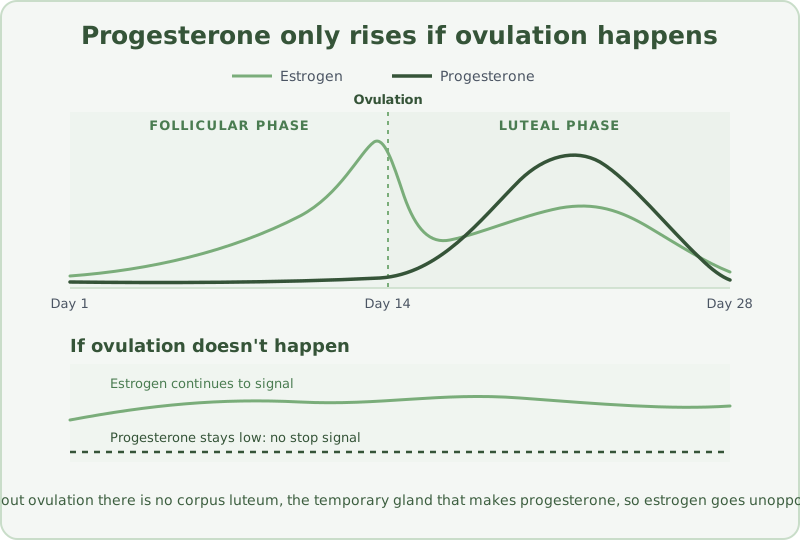
The pattern holds true across the lifespan. Fibroids generally shrink after menopause, when estrogen drops, and they do not appear before puberty, when estrogen is low. What most women are never told is that the drivers of estrogen dominance are multiple, and they are not all coming from the ovaries.
The gut connection almost no one mentions
The first driver most people miss is what is happening in the gut.
Your gut is home to a collection of bacteria known as the estrobolome, which helps regulate how estrogen is processed and cleared. After the liver prepares estrogen for elimination, certain gut microbes produce an enzyme called beta-glucuronidase that can reactivate some of that estrogen, allowing it to be reabsorbed instead of excreted.
When the gut microbiome is imbalanced, that process can shift. Clearance becomes less efficient, and more estrogen gets recycled back into circulation. Research comparing women with uterine fibroids to healthy controls has found meaningful differences in gut microbiome composition, with lower microbial diversity associated with higher fibroid burden.
This is why gut-focused steps can support hormone balance: dietary fiber, fermented foods, and in some cases probiotics. It is the same system, not a separate issue. For a lot of women, this is the piece that reframes things. Fibroids are connected to what is happening throughout your whole body, including your gut. If digestion is part of your picture, the guide on naturopathic support for digestion and gut health goes deeper.
The vitamin deficiency that keeps showing up
This next factor is one of the most measurable and modifiable in the research, and it still rarely comes up in fibroid conversations.
Vitamin D deficiency is a documented risk factor for uterine fibroids, and women with sufficient vitamin D tend to have a lower risk of developing them. Multiple studies have followed fibroid patients over 10 to 12 weeks and found the same pattern: fibroid volume increased in the placebo group, while growth was modestly reduced in the vitamin D group.
- A 2020 randomized clinical trial in Complementary Therapies in Clinical Practice found fibroids grew in the placebo group over 12 weeks while vitamin D inhibited growth.
- A 2019 randomized trial in the Caspian Journal of Internal Medicine found fibroid size decreased after 10 weeks of vitamin D compared to placebo.
- A five-year prospective ultrasound study in Fertility and Sterility found that women with higher vitamin D levels had measurably slower fibroid growth.
A note on what the evidence does and does not show. Some studies suggest small reductions in size with supplementation, but the more consistent finding is that vitamin D helps slow further growth and progression rather than reliably shrinking larger, established fibroids. It may help stabilize them over time.
Most of the women I see with fibroids have never had their vitamin D checked in the context of their fibroid history. It is not a standard part of the workup. Vitamin D also supports gut microbiome diversity and helps regulate inflammation, both of which connect back to estrogen clearance. These drivers interact.
If you take one thing from this post, get your vitamin D tested and know your number. It is one of the lowest-cost things you can do, and the data supports paying attention to it. The usual caution applies: test first, then supplement to your levels rather than guessing at a dose.
Vitamin D can become toxic when taken at high dosages, which is why it is very important to test and not guess when it comes to supplementing with vitamin D.
What is coming in from your environment
This is the one that tends to surprise people most, because this source is not internal.
Xenoestrogens are synthetic chemicals that mimic estrogen in the body. They bind to estrogen receptors and activate them, adding to your total estrogen load without your body making a single extra molecule of its own. BPA, found in many plastics, is one of the most studied. Research shows it binds directly to estrogen receptors, and at least one study links BPA exposure specifically to fibroid growth.
Common sources of BPA and similar compounds include:
- Plastic food storage containers and water bottles
- The lining of canned goods
- Some conventional dairy and meat products
- Certain personal care products and cosmetics
- Pesticide residues on conventionally grown produce
Women in the United States have measured significantly higher estrogen levels than women in many other countries, and researchers attribute a substantial part of that gap to environmental xenoestrogen exposure.
The practical goal is not perfection. It is reducing your load. That is why I suggest aiming for glass or stainless steel for food storage and water, and reading labels for what goes on your skin. Small, consistent changes add up across your total exposure.
The stress connection that ties it together
We have covered the hormonal mechanism, the gut, vitamin D, and environmental inputs. The last driver is part of why all of those can get worse at the same time, and it comes back to how your body handles stress.
Chronic stress elevates cortisol, and sustained high cortisol disrupts the production and balance of sex hormones, including the estrogen-to-progesterone ratio. Stress also disrupts the gut microbiome, specifically reducing beneficial bacteria like lactobacillus species that matter for healthy estrogen metabolism. So stress, gut imbalance, and estrogen dominance sit in a loop together.
Research from Boston University found that women who experienced significant chronic stress or trauma were up to 36% more likely to develop uterine fibroids.
For a lot of my clients, this is the piece that connects everything. They have often already been working on diet and supplements, but the stress piece keeps undermining the rest. You cannot out-supplement a dysregulated nervous system. It is also why fibroids, PMOS (polyendocrine metabolic ovarian syndrome, formerly PCOS), and fertility challenges tend to cluster in the same person: they share upstream drivers, and chronic stress is one of the most significant.
This is where I point people toward steady, doable stress-reduction practices: gratitude journaling, yoga, breath work. I am also a strong supporter of therapy as part of a well-rounded approach. If cortisol is on your mind, the cortisol trend, explained covers what it actually does and what helps.
Support estrogen clearance through your meals
Fiber, fermented foods, and steady blood sugar all support how your body processes and clears estrogen. Healthy Hormones Made Simple is a practical meal framework with high-protein, fiber-forward meals you can actually keep up with.
Get the nutrition package →Fibroids are not the mystery they are made out to be
The research has identified multiple upstream drivers, and most of them are addressable in some way. The mistake I see most often is treating fibroids as an isolated uterine problem, when they are usually a signal that your hormonal and metabolic system needs support.
Three things to hold onto:
- Estrogen dominance is driven by multiple factors, not just your ovaries.
- Gut health and vitamin D are two of the most modifiable factors, and almost no one is checking them.
- Chronic stress is the thread running through all of it.
If you have been advised to monitor things without any discussion of these underlying factors, it may be worth advocating for yourself and seeking a provider who takes a more root-cause approach. To understand how estrogen ties into related conditions, ovarian cysts and PMOS are not the same thing covers a lot of the same hormonal ground. And if you want to look at the full picture for your own hormones, the guide on naturopathic support for hormonal imbalance is a good place to start.
If you are located in Ontario and want to map out a plan, you can book an appointment. One step at a time, you do not need to change everything at once.